Contamination in the Blue Bin
Contamination in the blue bin is an ongoing issue at the Material Recovery Facility (MRF) in Manitoba. These are the most common causes of contamination in the blue bin:
- Items that aren’t on the accepted list for your community.
- Accepted containers with leftover food residue or that have been heavily soiled with grease.
- Materials that are recyclable, but aren’t accepted in the blue bin (e.g., electronics, Household Hazardous Waste) as they require special handling.
- Accepted materials that have been nested inside of each other, or bundled inside a bag
Manitoba’s contamination rate is 10-15%. We can all make an effort to reduce the amount of contamination in the blue bin, as it increases costs, emissions, and can potentially ruin fiber materials such as paper and cardboard. Remember, recyclables are a commodity that must be bought by a producer to be recycled. If too many heavily contaminated items get into a bale of recyclables, it may occasionally make the bale unfit to be sold.
Common materials that contaminate recycling.
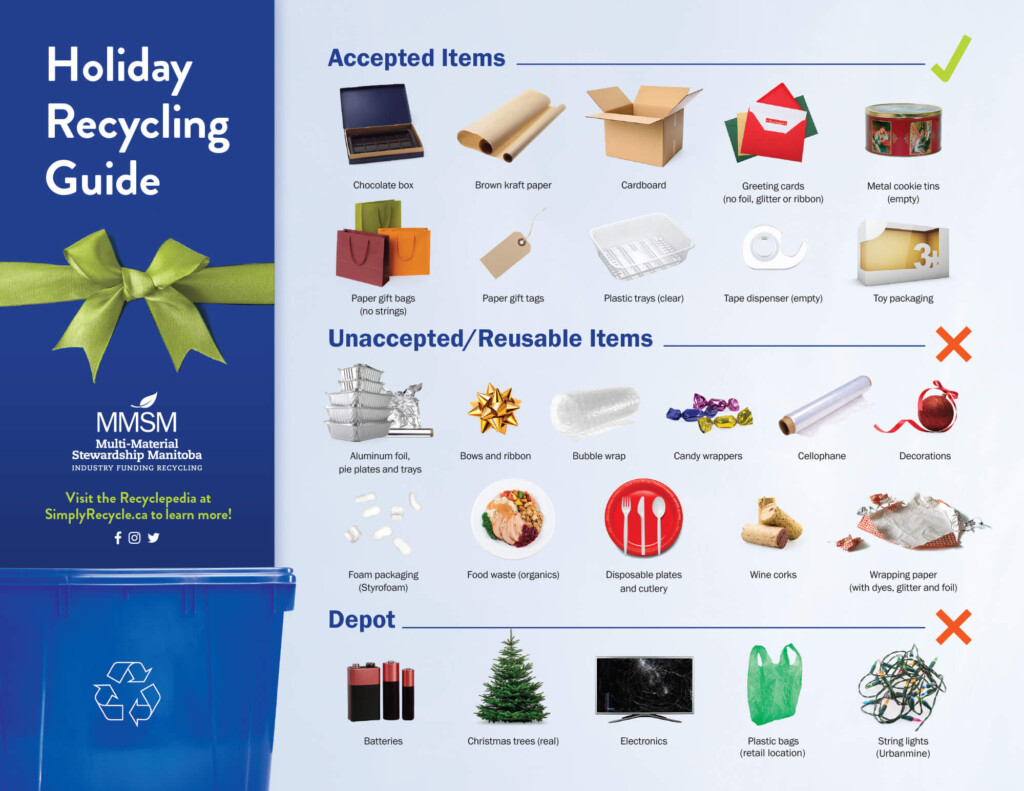
Here are some unaccepted items that commonly make their way into the blue bin. Please DO NOT put these into your blue bin:
- Foam packaging (i.e. Styrofoam)
- Black plastics
- Aluminum foil, (including pie plates and trays)
- Paper cup lids (i.e. coffee cup lids, fountain drink lids)
- Textiles
- Ceramics
- Compostable cutlery and containers
- Plastic, and paper straws
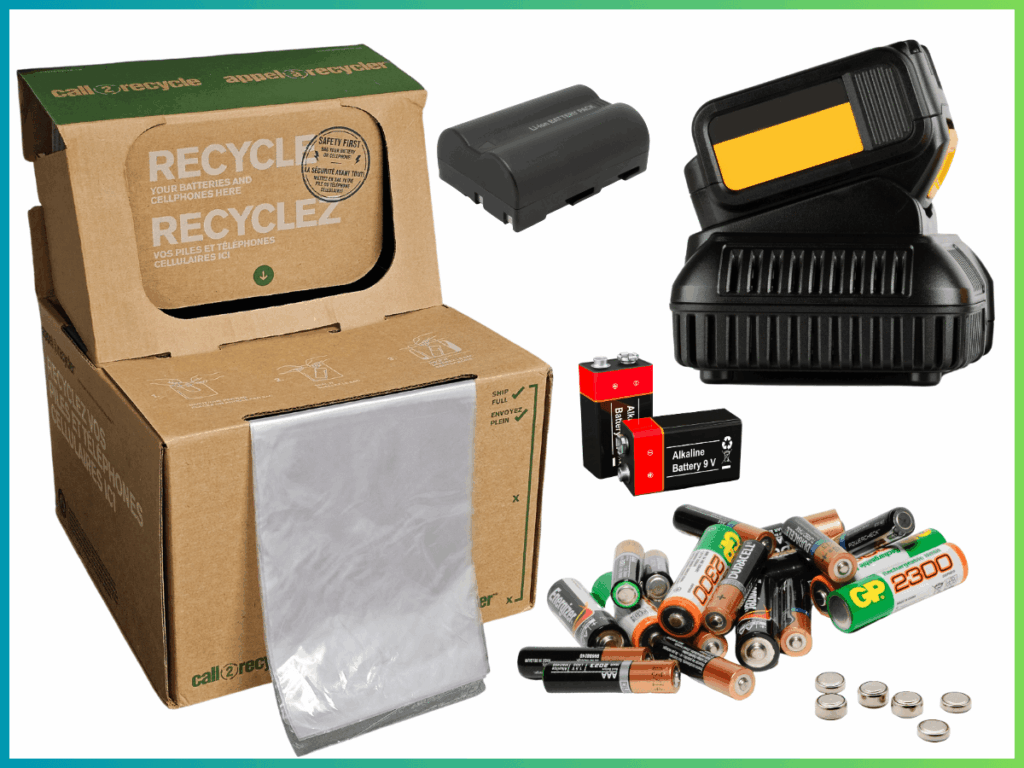
Here are some items that are recyclable, but not in the blue bin. You can recycle them at drop-off locations all over Manitoba. Look an item up in the Recyclepedia to find a location near you:
- Electronics
- Household Hazardous Waste (HHW)
- Tires
- Batteries
- Used oil and gasoline
- Plastic bags
- Prescription and over-the-counter medications, including natural health products.
- Thermostats
How to prevent contamination in your blue bin
- Make sure your containers are empty before they go in the recycling. A quick rinse is always appreciated to get rid of any lingering smells or food residue.
- Don’t bag or nest your materials inside one another. Toss your recyclables loosely into the bin. The machinery at the MRF is automated, so it’s unable to sort materials that have been stuffed inside a bag or inside other materials. Doing this is counterproductive to the recycling process.
- Check with your municipality and the Recyclepedia on what materials are currently being accepted in your recycling program. Accepted items can vary over time depending on market conditions. Putting unaccepted items in your blue bin reduces the value of your recyclables which increases recycling costs for your community.