

Paper Cups Are Now Recyclable Across Manitoba

Paper cups have long been a point of confusion in recycling programs. They look like paper and feel like paper, so it seems like they should be recyclable like paper. Because of the other materials used to make them, many programs didn’t accept them. That has now changed.
Manitobans can recycle empty paper cups
Empty paper cups are now accepted for recycling across Manitoba. That includes coffee cups, fountain drink cups, Slurpee cups, and other paper cups. Next time you have one to recycle, here’s what to do.
How to recycle paper cups
Remove the lid, empty the cup, and put the cup in your recycling bin. Paper sleeves on coffee cups can stay on.
Emptying the cup matters: food, liquid, and other leftover contents can affect paper quality and hurt the recycling process.
Do not recycle
- Plastic lids for coffee cups
- Straws, stir sticks, or spoons
- Cups with liquid or food still inside
Why are paper cups now accepted?
Recycling programs can only accept paper items that paper mills are able to process. Paper cups have a thin coating that lets them hold liquid, and they’re often printed with strong dyes. Both make the cups harder to process and limit what mills can turn them into compared to plain paper and cardboard — which is why many programs historically left them out.
Our team worked with recycling partners to review processing requirements, paper market conditions, and local recycling data. We determined paper cups can now be responsibly managed across Manitoba’s household recycling system.
Reducing is still the best option
The best way to reduce waste is to use less. Most coffee shops let you use your own travel mug, and many takeout restaurants and convenience stores will fill a cup you bring yourself. Bring your own cup if you plan on getting a drink on the go.
If you forget your mug one morning, or stop for a soda this summer, go ahead and recycle the cup.
Recycling Contamination: Will It Spoil the Whole Bin?
Recycling contamination is a problem, and the reasons may surprise you.
A load of residential recycling may contain items that don’t belong, but that doesn’t mean the entire load is contaminated or no longer fit to be recycled. High-tech sorting facilities can separate your recycling from the things that don’t belong. So, what’s all the fuss about contamination in the blue bin, and what happens to contaminated recycling?
What is recycling contamination?
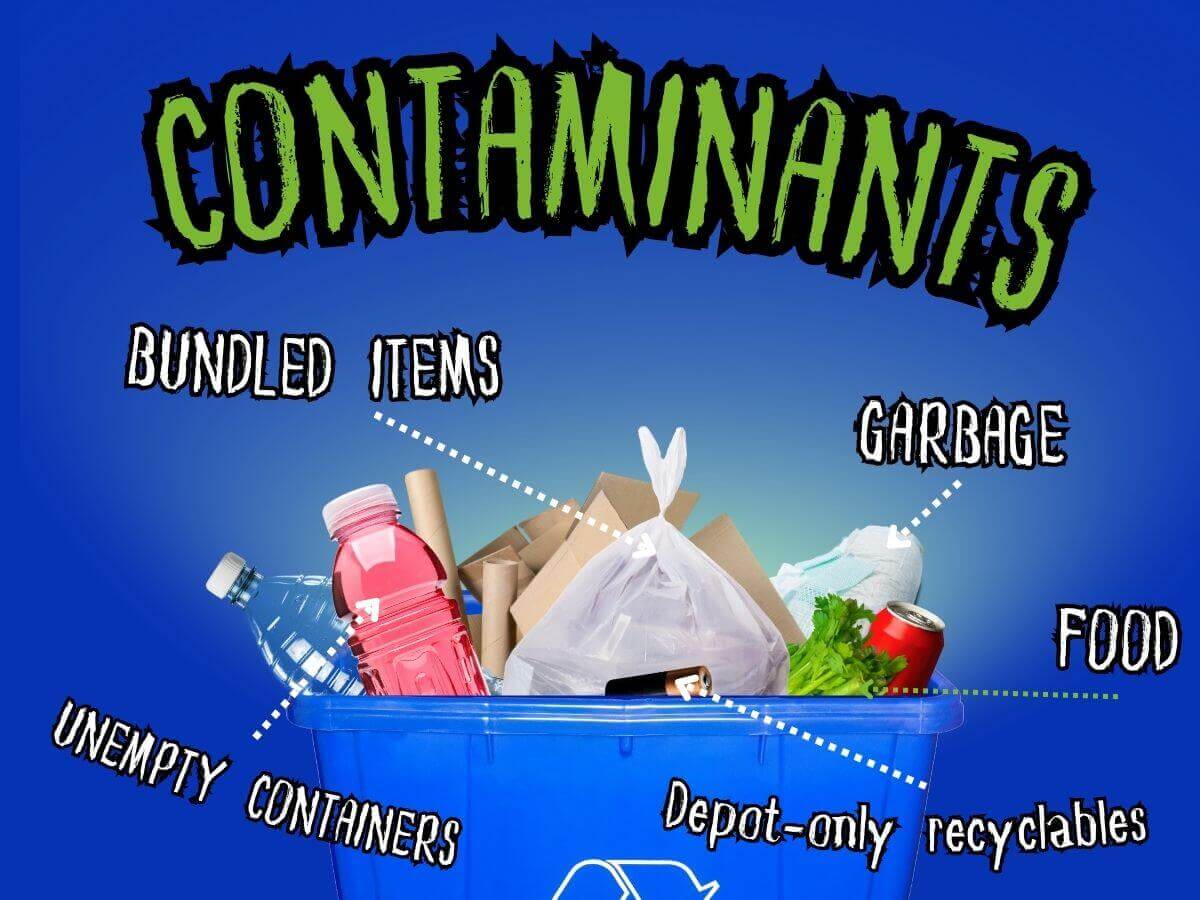
Recycling contamination occurs when anything that isn’t allowed in a blue bin ends up in one. It varies by location, but for Manitoba’s residential recycling programs this includes:
Items that are not accepted in the blue bin in your community, such as:
- Garbage
- Organic waste
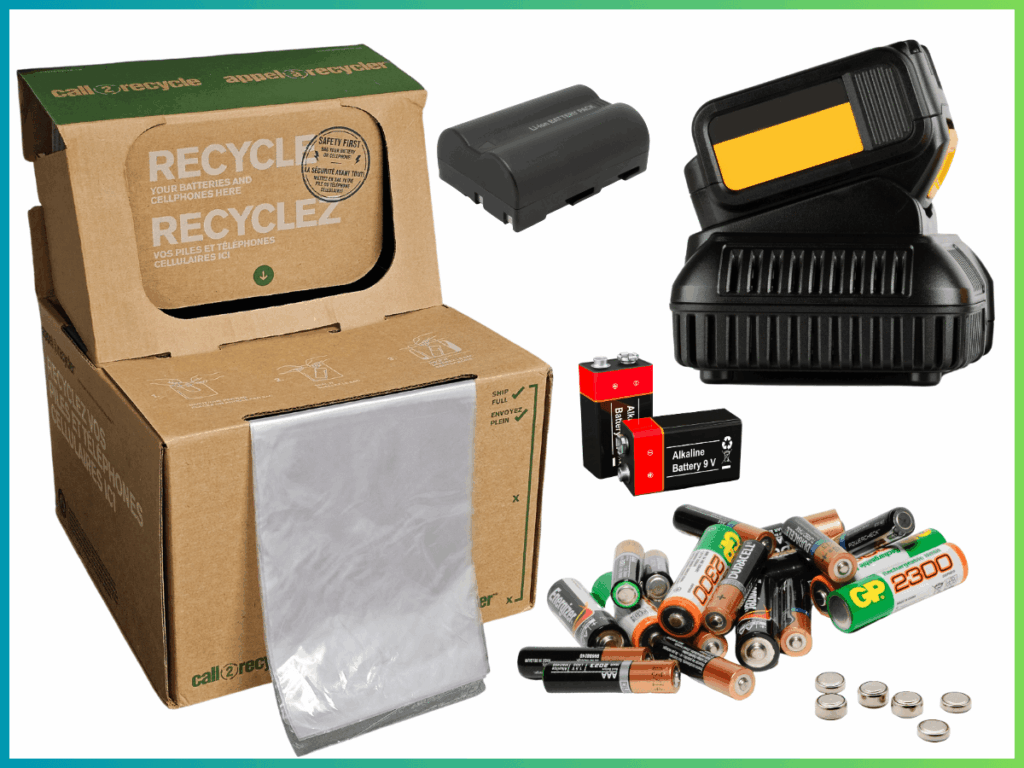
- Items that can be recycled through depots but can’t go in your blue bin, as they require special handling (e.g., electronics, household hazardous waste containers, batteries, and much more).
Items that are accepted in your blue bin, BUT:
- they contain excessive food or liquid (note that some residue is fine; check out this video to see how clean containers should be).
- they have been bundled together (i.e. put in an opaque plastic bag or nested inside other materials).
On average, 15% of the items collected in Manitoba’s residential recycling are contaminants. We list the most common contaminants later in this article.
What happens to contaminated recycling (and what doesn’t)?

A somewhat-common belief exists that if someone’s recycling is contaminated, everything goes to the landfill, no matter how perfect the rest of the recycling is. This is not true. If it were, there wouldn’t be a point in collecting recycling, because there’s bound to be some contamination in every truck load.
Once collected, residential recycling goes to a sorting facility. Workers and machines sort accepted recyclables by material type and then compact them into bales. Nearly all non-accepted items get filtered out and taken to a landfill. The sorters aren’t perfect, so some residual waste may get baled with recyclables.
The bales are then shipped to end-markets (i.e., paper mills, metal or plastic processors) that process the materials to be used to manufacture new products. The processors that purchase the bales permit some contamination and will remove any residual waste that doesn’t belong. If the bales repeatedly exceed the permitted level of contamination, the processors may refuse them. But don’t panic—this is rare thanks to the high efficacy of modern sorting facilities.
But if that’s the case…
Why is recycling contamination a problem?
1. Worker safety and equipment damage
Many items pose risks to collection and sorting staff and their equipment. For example, batteries are the most common cause of recycling truck and sorting facility fires.
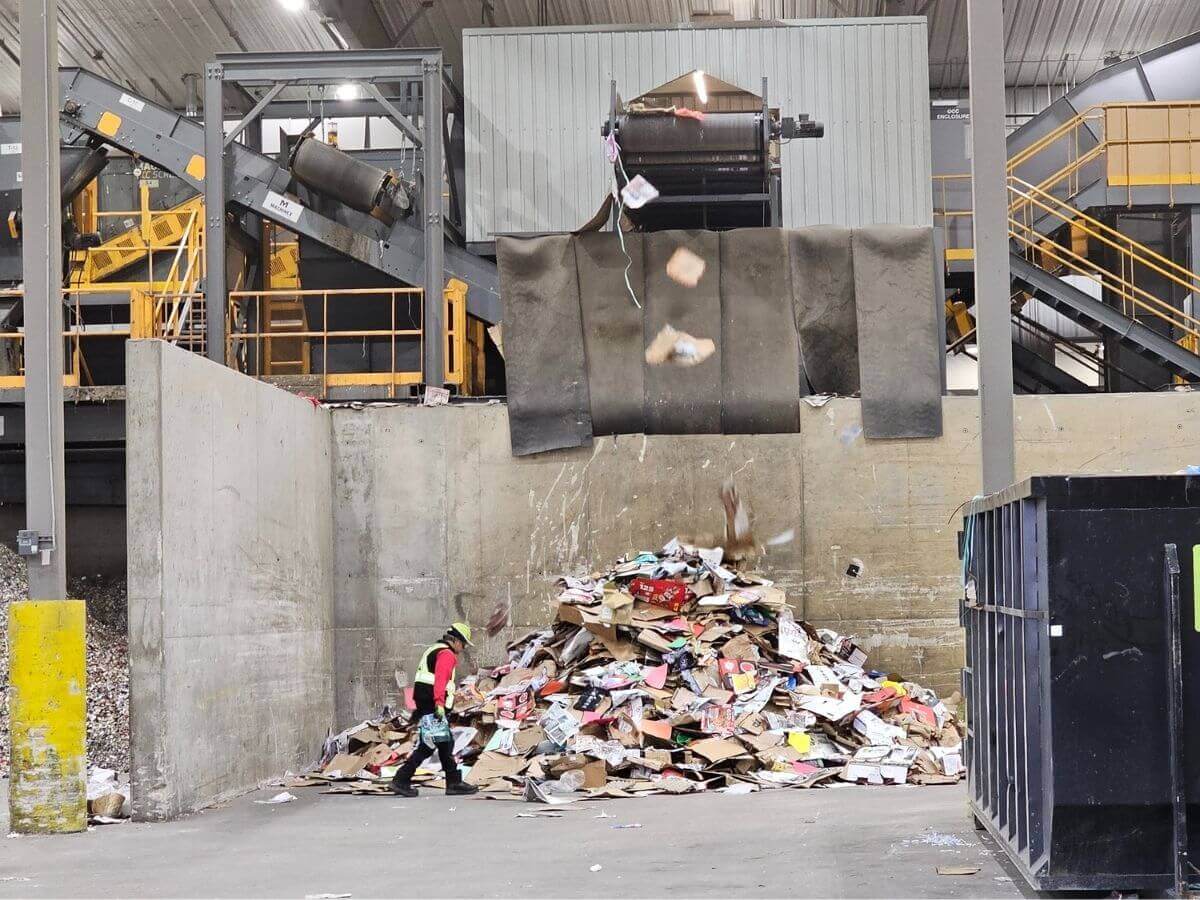
Although most recycling is sorted by machinery, staff must first remove contamination by hand (which moves quickly along conveyor belts) that could damage equipment. Furniture, scrap metal, and other large or sharp objects can injure sorting staff.
Biohazards like pet waste or leftover food, and chemical hazards like fluorescent light bulbs can have the potential to cause serious illness to the workers that handle them.
Plastic film and bags are surprisingly detrimental; they get tangled in machinery, and workers that remove them may not see potential hazards under or in the bags.
2. Increased transportation (more fuel emissions)
As mentioned, any non-accepted items collected get sorted out. They then need to be taken to a landfill. This adds an extra trip to dispose of things that could’ve been collected by the residential garbage trucks already on the road. It ends up taking two trips to end up in the same place it would have had it been just put in the garbage bin.
3. Contamination of accepted recyclables
Perfectly good recyclables occasionally don’t get recycled due to contamination. This typically happens in one of three ways:
a) Nesting – When different types of materials are placed inside each other (e.g., a soup can inside a cereal box) which can prevent sorters from putting them into the correct stream.
b) Improperly bagging recycling – In many communities, it’s ok to put your recycling in clear bags. But if they’re put into black or opaque bags, staff can’t see whether it’s recycling or garbage, and they typically won’t open them for safety reasons.
In many communities, such as Winnipeg and Brandon, the only time a clear bag should be in the blue bin is if it contains shredded paper. Other materials can’t be bagged—not even in clear bags. This is because staff need to manually open and empty the bags before they reach the sorting line. There’s an enormous amount of recycling that needs to be processed daily, and if too many people bag their recycling, sorting staff won’t have time to safely open and empty every bag on top of all the other things they do to keep the facility running.
c) Excessive food and liquid – Metal, glass, and plastic recyclables aren’t easily affected by food or liquid contamination. As long as there’s not a lot of food or liquid in them, they’ll be baled and sent to end-markets that will clean them of any food, dirt, or other residue.
Paper and cardboard aren’t as resilient. Paper quality decreases when it absorbs food or liquids, and it can’t be washed like plastic and metal. For this reason, paper-based items can become contaminated if unemptied containers in the blue bin or recycling truck leak onto them.
4. Increased costs
Each problem above increases operational costs. Plus, when would-be recyclables are thrown out because they’re tainted by excessive food or liquid, it reduces revenue from material sales that help offset program costs.
How to reduce recycling contamination.
You can help reduce your community’s recycling contamination rate by following the steps below:
- Make sure your containers are empty before you toss them into the blue bin.
- Toss your recyclables into the bin loosely; don’t nest the materials (i.e., stuff them into one another) and don’t bag them unless your community’s program permits.
- Don’t put anything in your blue bin that your community does not accept.
When in doubt, check the Recyclepedia. It shows you what can go in your blue bin and what can’t. It will tell you any special recycling instructions, and let you know if other recycling options are available for items that can’t go in your blue bin.
Top 10 most common contaminants in Manitoba recycling.
DO NOT put these in your blue bin:
- Styrofoam
- Coffee pods
- Clothing and textiles
- Compostable packaging
- Pots and pans
- Aluminum foil and plates
- Paper towels, tissues and napkins
- Plastic pouches and laminates (e.g., chip bags, bread bags)
- Ceramics
Other common types of contamination that can be recycled or safely disposed at depots and/or retailers, but not in your blue bin:
- Batteries
- Electronics
- Household hazardous waste (HHW)
- Ink and toner cartridges
- Medications (e.g., capsules, tabs, ointments) and some medical sharps.
- Paint cans (full or empty)
- Oil, antifreeze, and their containers (even when empty).
- Plastic bags and cellophane
- Thermostats containing mercury
- Tires
Author: Joel Larson

Does Manitoba Recycle Glass?
Does Manitoba Recycle Glass?
Does Manitoba Recycle Glass?
We’ve all heard at some point in our lives that glass is 100% recyclable and can be recycled endlessly without loss of quality.
It’s true, glass can be recycled forever. But is it recycled in Manitoba?
It’s complicated.

In short, glass is reused, but not as new bottles the way it used to be. This is due to the change in where glass containers are produced.
In the 1950s, producers started to transition from glass to plastic to make containers, opting for its cost-effectiveness, durability in transportation, and lighter weight.
When food and beverage containers were mostly glass, producers had bottling facilities scattered throughout Canada. It was expensive and risky to transport the heavy, fragile containers over long distances. Residents could return their glass to the local bottling plants to be reused.
As plastic containers became common, bottling facilities started closing, as it was cheaper and more efficient to transport goods over long distances. Manitoba no longer has a major bottling plant. Without a close end-market, the cost and emissions are too great to transport glass to be recycled into new containers.
What happens to recycled glass in Manitoba?
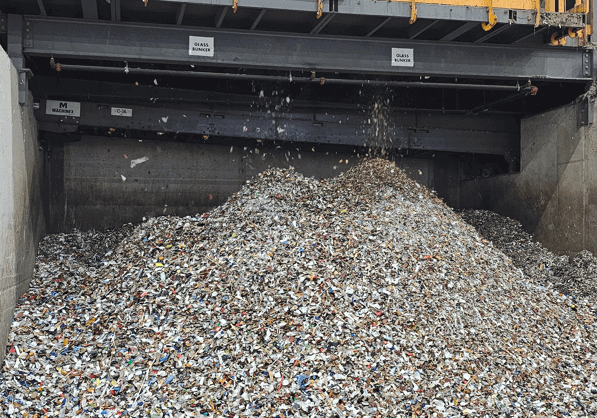
The collected glass is crushed at GFL’s Winnipeg processing plant. From there, it goes to Brady Landfill, where they use it to build and repair roads.
To be clear: Manitoba is not dumping the glass in the landfill as waste , which is what people often think when they hear that glass goes to the landfill. Instead, it finds a purpose as a key component in road construction. Glass serves as an environmentally friendly road base in place of sand and gravel, which need to be mined, processed, and transported.
Next time you hear that glass is being discarded in Brady Landfill, rephrase it to “glass is being reused as road base at Brady Landfill”
Are there other ways Manitoba could reuse or recycle glass?
We are all about sustainability and always looking for ways to reuse what can’t be recycled in Manitoba. There has been some exciting research done to find new ways to use glass, like this study at the University of Manitoba about using crushed glass to filter river water.
The study checked how well crushed recycled glass works in water filters for small town wastewater treatment in Dunnottar, Manitoba. Researchers compared it to regular sand filters over 128 days. The results showed that it works almost as well as sand in cleaning the water of contaminants like dirt and ammonia. The researchers think glass could be a good replacement for sand in these filters.
Manitoba Heavy Construction Association published a report which suggests crushing old concrete to use for new roads and buildings. Even though it doesn’t talk much about glass, it does mention we can recycle various things like glass, asphalt, and more for construction use.
Many organizations care about the environment, and we are looking for solutions to curb the waste of resources. These are just a few examples.
One day the market may change, and we could start recycling glass here in Manitoba again.
The important thing is that glass is already accepted in the blue bin, and it’s reused in Manitoba.
Recyclepedia’s Remarkable Recycler
This contest is over.
Teachers—show us how your classroom reuses, reduces, and recycles to be entered to win a cash prize.
What is the Remarkable Recycler Contest?
We’ve teamed up with Bell Media to encourage teachers and students to practice and promote waste reduction. Enter your class for a chance to be selected as our Remarkable Recyclers and win a cash prize for your class. There will be new winners each week, and some winners will be featured on CTV Morning Live or Bell Media’s Winnipeg and Brandon radio stations (see below)!
Enter to be a Remarkable Recycler.
Submit a photo showing how your class makes an effort to recycle (students do not need to be in the photo). Some examples are:
- A recycling corner with educational posters and guides.
- A class project focused on recycling and waste reduction. Check out our lesson plans for ideas.
- Anything your class does that encourages or helps students recycle!
The contest is open to all Manitoba teachers from kindergarten to Grade 12. We recommend students and parents tell their teachers to enter!
Teachers can enter easily online through one of our partners’ websites:
Share this contest with anyone who you think is making a difference. We can’t wait to see all the remarkable ways they recycle!
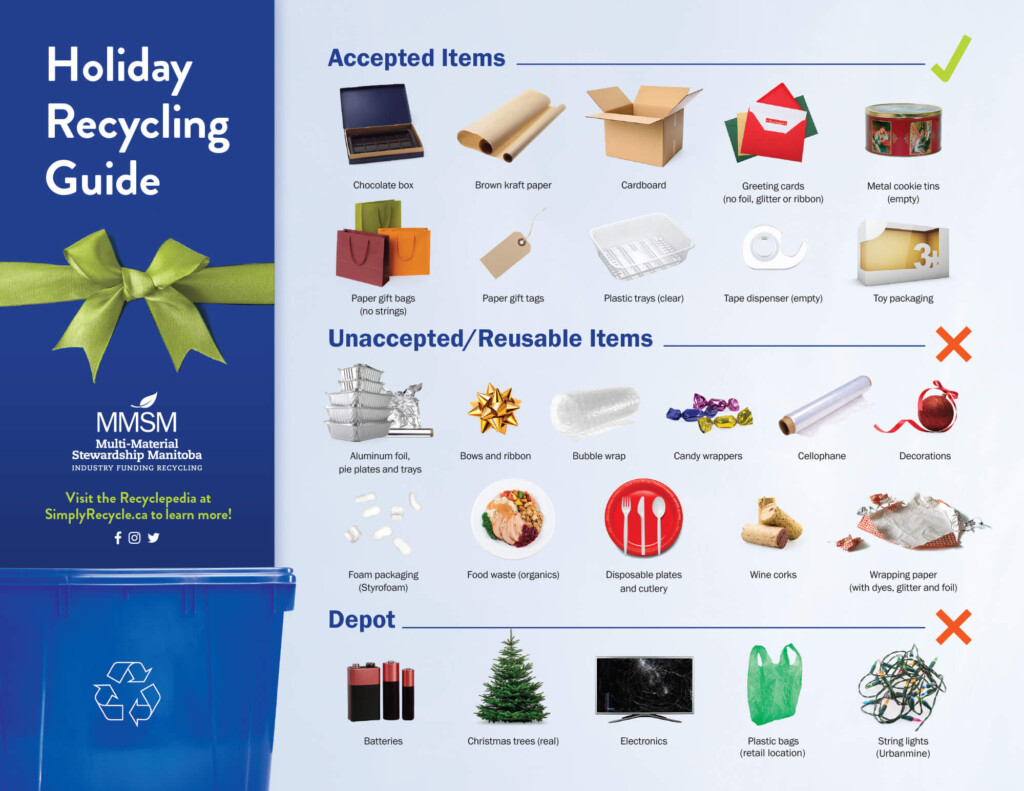
To Nest or Not to Nest?
Are you unknowingly contaminating your recycling?
It’s your birthday! You pull a shirt out of the gift bag your aunt and uncle gave you. Trying your best to pretend you love it, you toss the bag aside. Your aunt stops you and says there’s something else in the bag. You look back inside. Hidden at the bottom is a $100 gift card—a gift card you came close to losing out on…
This is what can happen to materials in your blue bin when you put them inside other recyclables (also known as nesting). The difference is your aunt was there to let you know about the gift card. There’s no one to tell the machines and workers who sort your recycling there’s a soda can hidden at the bottom of a cereal box.
Nesting recyclables is recycling contamination.
Nesting may seem like a harmless way to save space in your blue bin, but it’s a form of contamination. Even if all the nested materials are accepted for recycling, the different materials can end up getting baled together. This is because most recycling is sorted by automated machinery. Magnets pull metal food cans and lids, and optical sorters use lights and sensors to identify and separate plastics. The sensors can’t detect when there are other materials inside containers or boxes.
Recycling processors have staff who sort nested materials when they see them, but some get missed. Winnipeg’s residential recycling program collected an average of 210.4 tonnes of materials per day last year. It’s impossible to catch everything that doesn’t belong, and some bales get contaminated—but that doesn’t necessarily mean the bales don’t get recycled.
What happens to contaminated recycling?
In most cases, contaminated bales still get recycled. So, what’s wrong if they’re contaminated with other materials? Let’s think back to the soda can in a cereal box example.
When the bale of boxboard gets to a paper mill, the soda can and any other non-paper materials in the bale get thrown out.
Not only does the soda can not get recycled, but it also wastes energy, money, and time by going through the collection, sorting, and shipping processes just to end up in the garbage.
What if materials nest themselves?
Let’s say you do your best and put your recyclables into your blue bin individually. There’s a chance that gravity and movement will nest some materials on the way to a recycling facility. How can you prevent this from happening?
An empty, collapsed box can’t nest anything. Neither can a plastic tub with a lid on.
However sometimes things just don’t have a lid. What now? The best thing to do is avoid overfilling your bin. All materials should be loose in the blue bin.
How to save space in your blue bin.
Too much takeout? Too many deliveries? Too many bulk store visits? Sometimes it feels like the blue bin is filling faster and faster. Here are some tips to get more space without nesting materials:
- Try to reduce the amount of packaging you go through. Some containers are unavoidable (e.g., food, especially for large families), but if your bin is filling quickly, consider buying items where the packaging can collapse (more boxes, less plastic).
- Use reusable containers: Instead of buying single-serving snacks or drinks, use reusable containers and refillable water bottles.
- Reduce junk mail: Did you know you can request direct mail to avoid your mailbox? You can unsubscribe from junk mail! Check how on Canada Post website.
- Collapse cardboard and boxes; no need to remove the tape.
- Crush beverage cans by hand. Crushing cans by hand is fine, but using can-crushers can increase the chance of cans falling out of bales.
- Crush plastic bottles: Squeeze or crush plastic bottles to minimize their size. Make sure to put the cap on so they don’t get lost during the sorting process.
- Empty and rinse containers: You don’t need to scrub them spotless, but try to remove any remaining food, liquid, or other substances. Put the lids back on all containers (except for glass containers with metal lids). Having lids on will prevent smaller objects from getting inside.
- Only put accepted items in the blue bin. Your recycling could be filling fast because you’re wish-cycling – when you have an item that isn’t accepted, but you’re not sure, so you put it in your blue bin and hope it gets recycled. The intentions behind wish-cycling are good, but it leads to contamination and is counterproductive. The collection, sorting, and transporting of contamination from the recycling facility to the landfill leads to more emissions than if you had disposed of it properly.
Is the plastic in your blue bin getting recycled?
In recent years, you may have heard that only nine percent of plastic gets recycled. Wide misrepresentation of this statistic, among other reasons, has led many people to question whether the plastics they put in their blue bins are getting recycled. Some have even stopped recycling as a result, believing their recyclables (and their efforts) are going to waste.
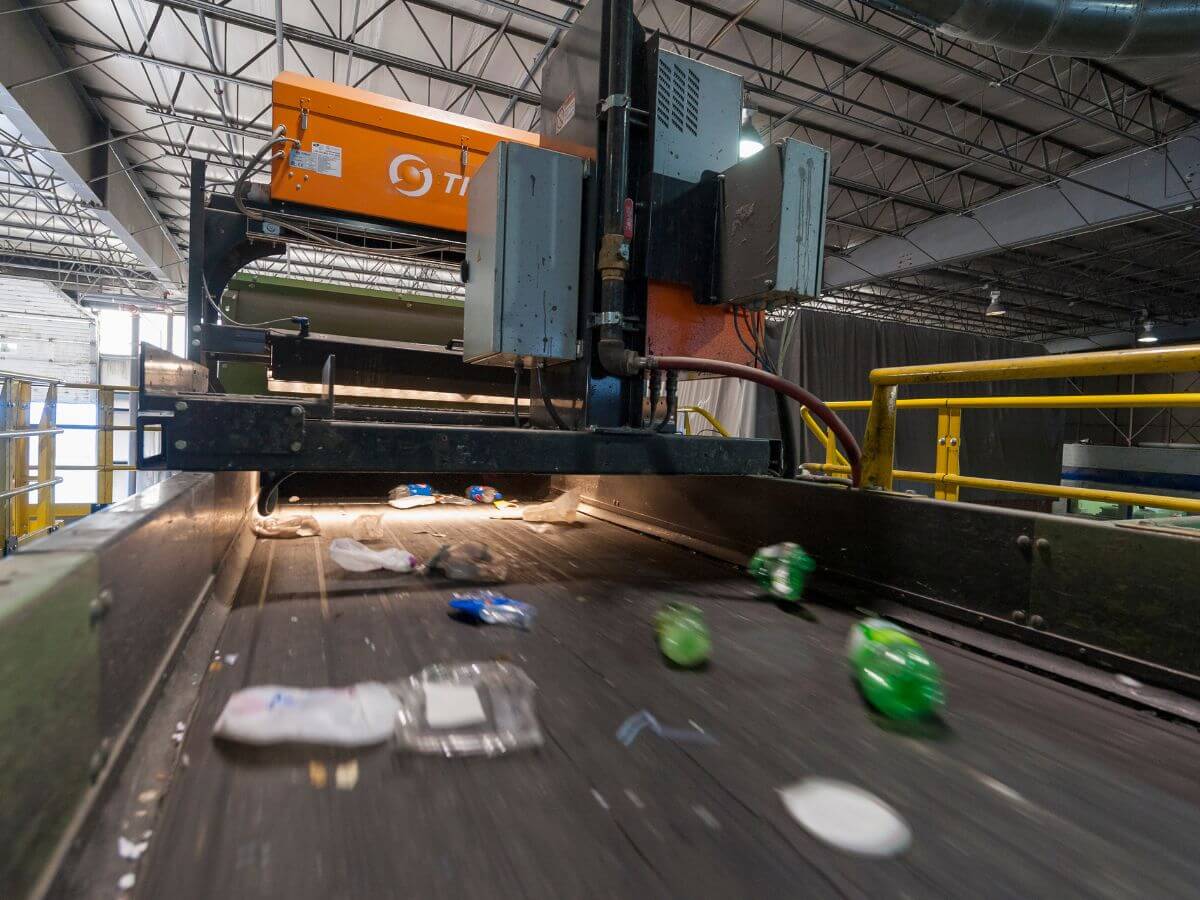
The reality is, nearly all recyclable plastic collected in Manitoba is recycled. Let’s look at what the 9 percent statistic really means, how much plastic Manitobans are recycling, and why plastic in the recycling stream occasionally can’t be recycled.
Is it true that nine percent of plastic is recycled?
In 2017, a study found that nine percent of plastic produced globally has been recycled. It gained a lot of media coverage and left many with a misunderstanding of what it means.
The statistic refers to all plastic ever made—recyclable and non-recyclable. Most plastics aren’t accepted for residential recycling due to the lack of end-markets or because they’re not recyclable. Although nine percent is a low number, it represents millions of tonnes of plastic annually that are kept out of landfills and environments across the world. As technology, public policy, and education improve, so will these numbers.
The next phase of Canada’s federal ban on several single-use plastics comes into effect in December 2023. Retailers and restaurants will no longer be able to offer plastic straws, food containers, stir sticks, and other single-use plastic items. The government estimates the ban will reduce Canada’s total annual plastic waste by about three percent. Other environmental groups estimate about a five percent reduction.
For now, the best way to eliminate plastic waste is to reduce consumption or reuse/repurpose items. But when that’s not possible, recycling accepted materials will keep them out of landfills.
What happens to my recycling in Manitoba?
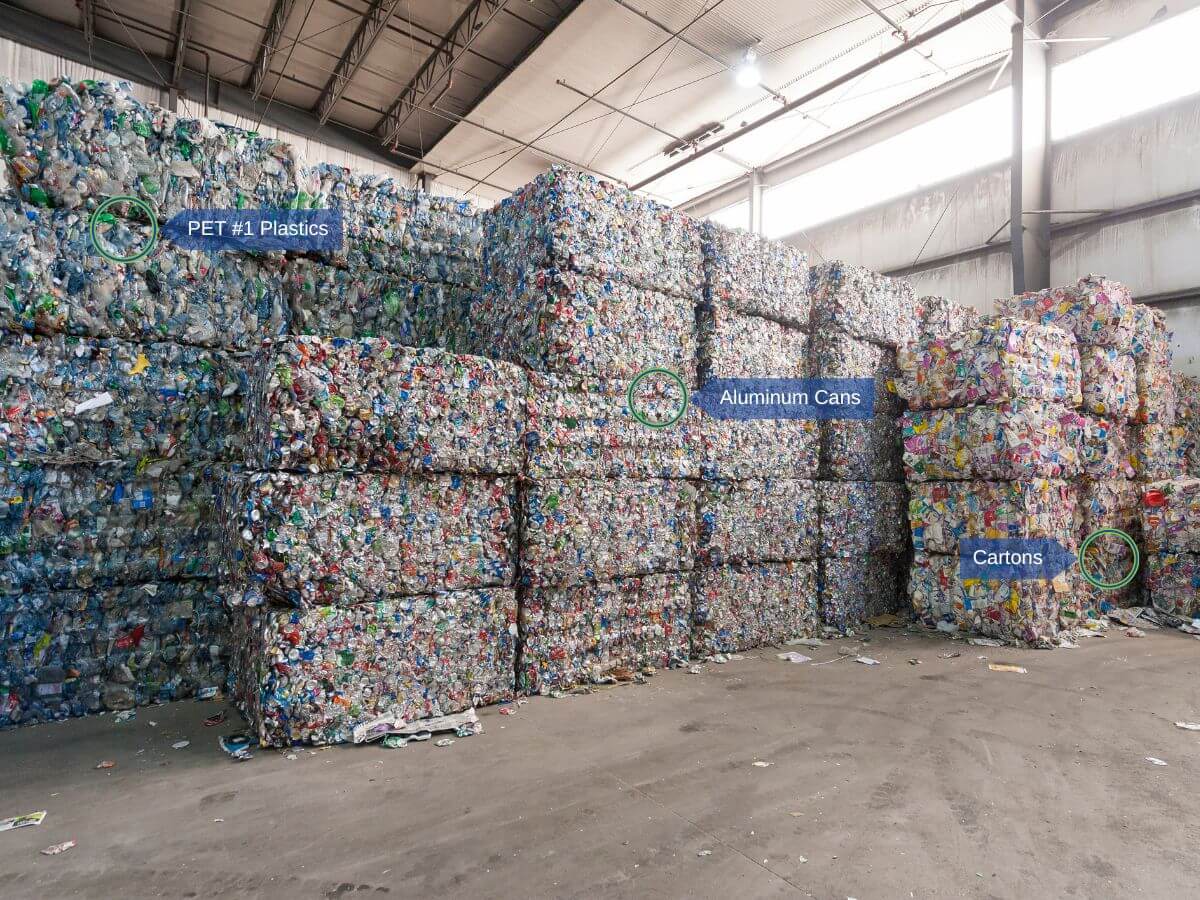
After being sorted, recyclables are compacted into bales before being transported to end markets.
Any accepted materials collected from your blue bin will get recycled unless they’re contaminated. Recycling contamination can occur in many forms. Thankfully plastic is much harder to contaminate than other materials. There are three main causes of plastic contamination:
- When containers contain excessive amounts of food or liquid.
- When recyclables are placed in opaque plastic bags or nested together.
- When unaccepted plastics are placed in the blue bin.
In Manitoba, there’s a 10-15% contamination rate in residential recycling. This means that 85-90% of materials collected are recycled. To avoid contaminating your recycling, it’s crucial to follow recycling guidelines in your area.
Like any other accepted material, once plastics have been sorted and baled, they’re shipped to an end market. MMSM monitors where communities are sending their recycling. They must ensure recyclables go to an acceptable end market to receive funding from MMSM—burning or sending materials to landfill is unacceptable. Recycling from Manitoba is shipped to end markets in Ontario, the U.S. and sometimes exported overseas depending on market conditions. Where they get sent depends on market conditions and can change daily.
The plastic collected from blue bins will get recycled, but we can only recycle as much as we collect.
How much recyclable plastic is recovered in Manitoba?
MMSM tracks recovery rates for all accepted materials in Manitoba each year. In 2020, Manitobans recycled 10,878 of the 23,692 tonnes of plastic packaging that entered the province. That’s a recovery rate of 45.9 percent—nearly double what it was 10 years ago at 23.3%.
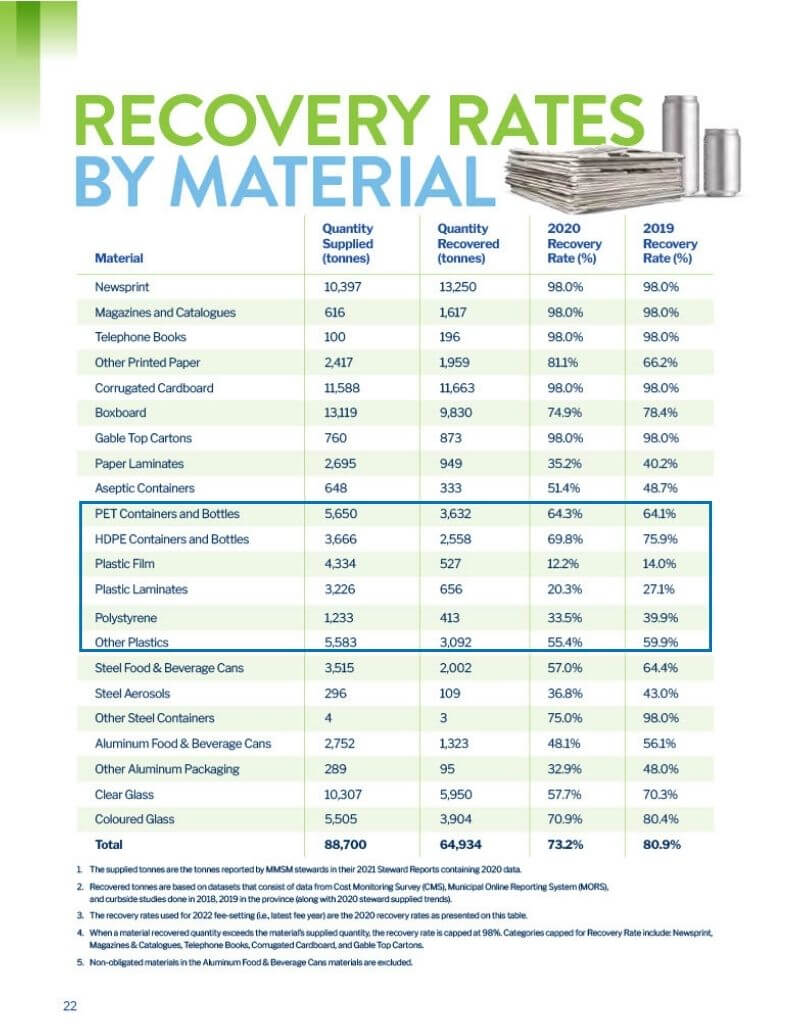
While there have been steady increases in recovery rates, there’s still lots of room to improve. Keep a recycling bin close to your garbage can, and if you’re unsure whether you can recycle something, look it up in the Recyclepedia. You can also view or print a recycling guide with common materials if you scroll past the Recyclepedia search tool.
Please recycle whenever you have the opportunity and encourage others. You can rest assured knowing that the items you roll out to the curb each week are being recycled.