

The Ultimate Manitoba Holiday Recycling Guide
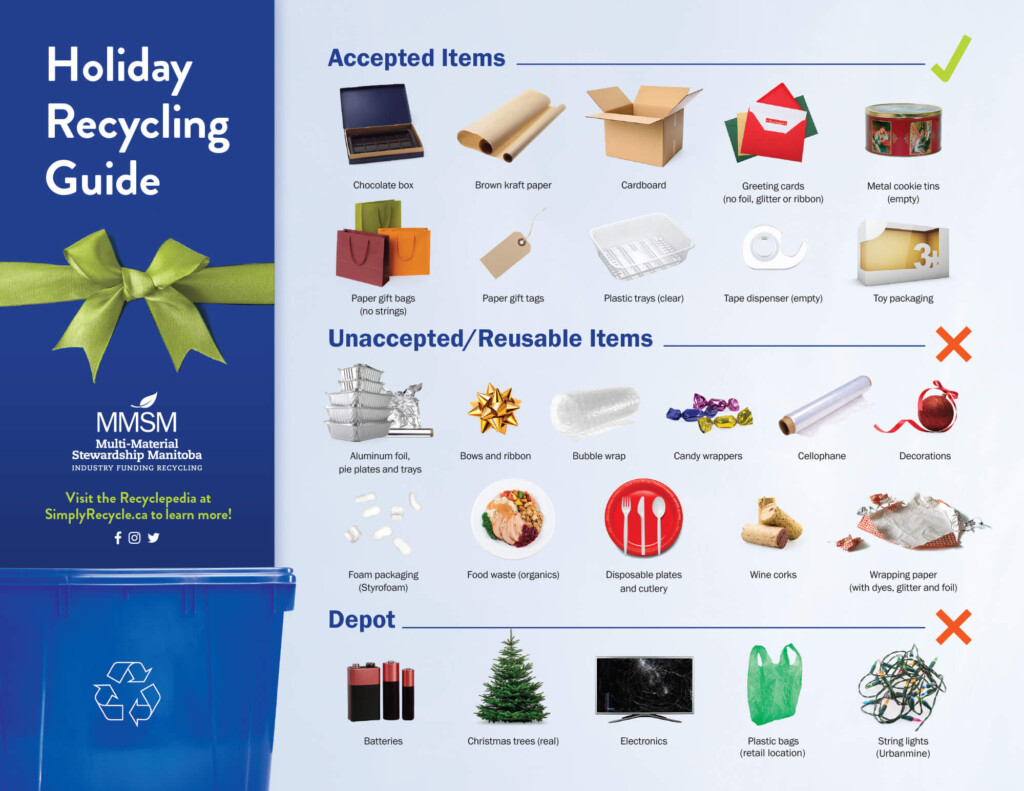
There are a few things you can always expect during the holidays: family dinners, exchanging gifts, and the clean-up that follows. Download our Manitoba holiday recycling guide to see how to best dispose of gift bags, wrapping paper, and other holiday items. We go into more detail on the most common holiday items below.
(more…)Where to Recycle Non-Blue Bin Items in Manitoba
Your household blue bin is for recycling packaging and printed paper. But there are lots of recyclable items that don’t belong in your blue bin (for reasons outlined below). You can visit drop-off locations, accessible to most Manitobans, to recycle batteries, electronics, tires, and more.
Scroll down to find recycling locations for common household items that don’t belong in your blue bin or garbage. Alternatively, you can search for any of the items below in the Recyclepedia to find out where to recycle them in your community.
(more…)Manitoba Students Showcase Wearable Art Made From Discarded Materials
Have you ever seen a work of art that inspired you? Great art is more than something impressive to look at. It gets people thinking, learning, and motivated to take action on important issues.
That’s why we teamed up with Take Pride Winnipeg once again for an eco-friendly fashion fest at Manitoba Eco-Awareness Day. The event at CF Polo Park welcomed students to design and showcase handmade garments either made of blue bin materials or items that normally go to landfills.
The fashion show demonstrated incredible ways to repurpose items that are typically discarded. MMSM and other Producer Responsibility Organizations were also there for students and spectators to learn about various ways to keep their communities clean.
Have a look at the amazing designs from this year’s finalists.
Newspaper and Plastic Bag Ball Gown
Jessica from O. V. Jewitt Community School crafted this prom night-worthy bouffant gown using newspaper and plastic takeout bags.
The bodice and outer layer of the skirt is made completely with newspaper. The front of the skirt opens to show a bright white underlay made from plastic bags. If you look closely, you can see a bouquet of handmade newspaper roses accenting the waist of the skirt.
Recycled Textile Skirt and Beret
Rohama from George V School took old, plain clothing and turned it into matching statement pieces. She added texture and personality to the skirt with plaid patchwork and made a beautiful black beret to tie the outfit together.
Baler Twine and Netting dress

Ivy from MacGregor Elementary School weaved together her dress using baler twine and netting. That’s right—this elegant gown is made completely out of farm refuse. Ivy saw the beauty in the colourful scraps of discarded twine and turned them into this stunning dress accented with a braided waistband and forearm sleeves.
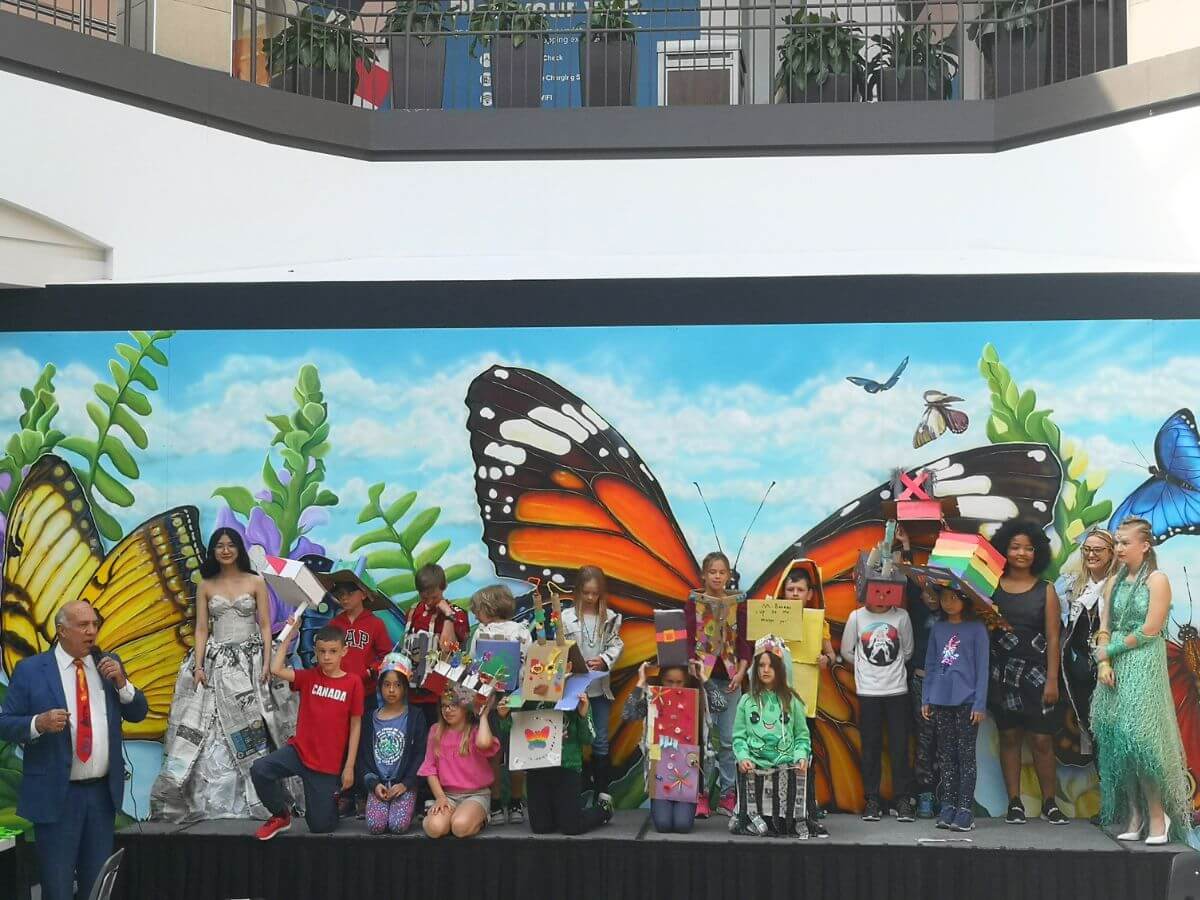
These Manitoban students put an immense amount of creativity and time into their designs. MMSM has sponsored this event for years, and each year, we’re shocked and inspired by the creations students put on display. We hope they inspired you too.
Give New Life to Your Old Stuff
Your blue bin is for printed paper and packaging. But what about bikes? Washing machines? Mattresses? Manitobans—admirably not wanting to waste—regularly ask us where they can recycle products like these that are damaged or no longer needed.
It’s always best to reuse something before recycling it, so our go-to answers are to donate to second-hand stores, charities, or post it online for free. But there are some products that won’t get any takers, either because they’re too damaged (like a tv with a cracked screen) or too big (like appliances).
But there’s still hope for lots of those damaged and seemingly unwanted goods. We’ve put together this list of places you can take your old appliances, mattresses, electronics, and even bicycles, to be either refurbished and reused, or recycled.
Note: The information below is subject to change. Always check with the business/organization directly before taking items to recycle.
Where to recycle appliances (stoves, washers, dryers, dishwashers, and more)
Provencher Appliance – Most home appliances
Location: 404 Archibald St, Winnipeg
Provencher Appliance will take most home appliances:
- washers & dryers
- stoves
- microwaves
- dishwashers
- refrigerators, freezers, & A/C units (see other places that accept these in the next section)
The company tries to refurbish old or broken appliances first, keeping them alive and out of landfills. If there’s simply no hope for grandma’s cold war stove, they strip it for parts that they can use to save other appliances and recycle the rest.
You can drop off your appliances during their opening hours or pay a fee to have it picked up.
Mother Earth Recycling – Microwaves
Location: 771 Main St, Winnipeg
An Indigenous Social Enterprise in Winnipeg, Mother Earth Recycling accepts mattresses and a variety of electronics (more on that later in the article) for recycling. They also accept microwaves, but this is the only appliance they accept.
You can drop your microwave off to be recycled during opening hours for free or pay a fee to have it picked up.
Other parts of Manitoba
Check with your R.M. or local appliance stores to find out if they recycle appliances.
Where to recycle refrigerators, freezers, and A/C units
EfficiencyMB – Fridges and freezers
Location: Manitoba-wide
To rid the province of inefficient freezers and refrigerators, EfficiencyMB is offering free pick up and a $30 Hydro rebate for working appliances over 20 years old (including other criteria) in coordination with Manitoba Hydro. Although its scope is limited, the program is a great way for some to responsibly dispose of they’re old refrigerating units.
Provencher Appliance – Fridges, freezers, and A/C units.
Location: 404 Archibald St, Winnipeg
We already mentioned them under the ‘appliances’ section, but in case you missed it, they refurbish and recycle refrigerators, freezers, and A/C units.
Other parts of Manitoba
Check with your R.M. or local appliance stores to find out if they recycle refrigerators and freezers.
Where to recycle mattresses and box springs.
Mother Earth Recycling
Location: 771 Main St, Winnipeg
Mother Earth Recycling is Winnipeg’s only mattress recycling service. You can also take your mattresses to the Brady Road 4R Depot, which takes mattresses to Mother Earth Recycling.
They separate the different materials in mattresses like foam, fabric, metal, and wood.
There is an $18 fee for each mattress or box spring to cover the cost of recycling the materials. You can pay an additional fee to have them pick up your mattresses.
Where to recycle electronics.
Recycle My Electronics (EPRA)
Location: Manitoba-wide
As the steward organization responsible for electronics recycling in Manitoba, Recycle My Electronics has drop-off locations across the province. They accept a wide variety of electronics like TVs, printers, cellphones, and many more. You can use their interactive map to find a dop-off site nearest to you.
Saving Audio Recycling
Location: Winnipeg
Saving Audio Recycling is a volunteer organization that refurbishes and recycles audio equipment. They donate refurbished equipment to local non-profits, cultural groups, and schools. Anything they can’t refurbish or use for parts is recycled.
They accept most audio equipment, such as stereos, speakers, record players, and more. Visit their site to see the full list of products they accept and arrange a drop-off or free pick up.
Mother Earth Recycling
Location: 771 Main St, Winnipeg
Mother Earth Recycling accepts most common electronics. They refurbish several kinds of electronics, such as computers and TVs, and recycle the rest following EPRA standards.
Where to recycle bicycles.
Your broken bike doesn’t belong in the dump. With a bit of work, it could be road-ready for years to come. There are a few volunteer-run places you can donate your bike to that will fix it or use any good parts left on it. They help reduce waste while providing affordable transportation to others.
Some places even have a workspace and volunteers that can help you with repairs, so you might not even need to get a new bike after all!
Bicycle recycling in Winnipeg
Coop Velo-cite- 190 Cathedral Ave. Open Sunday 12-4 p.m.
The Bike Dump – 631 Main St. Open Sunday 1-4 p.m. and Tuesday 6-9 p.m.
The WRENCH – Any Winnipeg 4R Depot. The WRENCH collects the bikes from the 4R Depots. They do not accept bike donations at their shops.
Bicycle recycling in Brandon
BNRC Bike Exchange – 440 Rosser Ave. Open Wednesdays 5-7p.m.
Other parts of Manitoba
Check with your local cycling shop to find out if they take used bikes or take to them to your local scrap metal dealer.
Hopefully you were able to find somewhere to donate your stuff. We’ll update this list as we learn of new places that can help Manitobans reduce their waste.
If you know any organizations or businesses that reduce waste by reusing, refurbishing, or repurposing products that would otherwise be disposed of, let us know so we can add them to this list. You can contact us here.
The Environmental Benefits of Recycling
Is there a point to our weekly walks with our blue bins to the curbside? To remembering what we can and can’t recycle? Is it even making a difference?
Yes, yes, and a big green YES.
For Earth Day, let’s explore the various ways recycling protects our planet.
Recycling conserves natural resources.
One of the most significant environmental benefits of recycling is the conservation of natural resources. Before the pages in your notebook were paper, they were part of a tree. Recycling items made of paper, plastic, and metal reduces the need to extract new raw materials. Recycling not only preserves the resources materials are derived from, but also other resources used in their production. For example, recycling 2,000 pounds of paper saves 7,000 gallons of water, according to an article from Stanford University.
With Manitoba recycling millions of kilograms of materials in curbside recycling each year (not to mention materials recycled through other programs), the benefits to our natural resources are massive. Don’t think of your empty bottles, cardboard boxes, or other recyclables as worthless junk that has served its purpose. Instead, think of them as the valuable resources used to produce them.
Recycling reduces greenhouse gas (GHG) emissions.
When paper and packaging can be made without extracting, transporting, and processing timber or metal ore, it emits significantly fewer GHGs. A 2009 Canadian study showed an emissions reduction of 369 kg of CO2e per tonne when producing recycled paper compared to paper made from virgin pulp (i.e., trees).
Much of the GHG reductions come from the energy saved from recycling.
Recycling saves energy.
Energy consumption is the biggest contributor to GHG emissions from paper and packaging production. Although Manitoba gets it’s power mainly from hydroelectricity, most energy is produced elsewhere. Manufacturing with recycled materials uses less energy than manufacturing with raw materials. An article by the National Institutes of Health states that recycled aluminum uses 95% less energy than it would to make the same amount from its virgin source. Other recycled materials also see great reductions in energy use:
- Steel – 60% less
- Newspaper – 40% less
- Plastics – 70% less
- Glass – 40% less
Recycling also diverts materials from landfills and incinerators. As landfill waste breaks down, it produces methane and, as you can probably imagine, burning waste releases numerous GHGs. Recycling your materials prevents both scenarios.
By reducing GHG emissions, recycling helps reduce air pollution and slow global warming.
Remember to Reduce and Reuse first.
Recycling beats the garbage every time, but don’t forget to reduce waste in other ways.
Be mindful of your impact as a consumer. Try to reduce your consumption of both recyclable and non-recyclable goods when possible. Look for zero or low-waste options for whatever you buy. Avoid single-use items. The federal government estimates their ban on a handful of single-use plastics will eliminate 1.3 million tonnes of waste over the next decade. Think of other items you can reduce in your life—getting a reusable water bottle or using refillable containers for bulk food are simple ways to cut back on waste.
Try to Reuse the things you do buy. Before you recycle that pickle jar or throw that old hat in the garbage, consider if you or someone else could make use of it. You could use the jar to store sugar (the bags always spill!). The old hat? Just because it’s not your style anymore doesn’t mean someone else wouldn’t love it. With thrift stores, the old proverb that one person’s trash is another person’s treasure is as true today as ever. For more valuable items you simply don’t need any more, try selling them online.
If you can’t reuse something, then recycle it. You’ll protect your own environment and the rest of the Earth. If you’re not sure if something is recyclable, visit the Recyclepedia or download the app to find out if it goes in your blue bin or needs to be recycled somewhere else.
MMSM Staff Recycling Tips
Working for a recycling organization, it’s an unwritten rule that our staff have to be passionate about recycling and the environment. In the spirit of Earth Month, we asked our staff to share tips on reducing waste in their everyday lives.
Joel, Communications Coordinator
Since moving into an apartment, I found that my little blue bin would fill up quickly and I would have to take it down to the bins three to four times a week. To be more efficient, I got a bigger bin. Now, I only take it down once or twice a week. Recyclables are light, so it’s not any harder to carry them out and lift them into the bin outside my building.
Another tip: if I’m running the dishwasher and there’s extra room, I put any dirty recyclables in there instead of rinsing them in the sink!
Kalin, Manager, Field Services
I try to find ways to reduce unnecessary food packaging in my home. Items like coffee, pasta, nuts, and spices can be bought using reusable containers at bulk stores. I’ve also started to refill some cleaning products (i.e., laundry detergent) with reusable containers as well.
Karen, Executive Director
Any plastic containers that I get, I save and reuse them for leftovers. I also reuse plastic packaging from toilet paper to line garbage bins, you should just be mindful when opening the package. I also keep a basket/bin in all areas of the house (including my car and workshop), to collect items for recycling. When they get full, it gets transferred to the recycling cart that goes out to the curb.
Noelle, Marketing & Communications Specialist
Besides recycling all I can in my blue box, I look for opportunities to recycle other items that aren’t accepted in my curbside recycling bin. I donate my old prescription glasses, as well as recycle the blister packs from my contact lenses at my optometrist’s office. I also recycle old pens and markers that are out of ink through Staples’ writing instrument recycling program. I keep reusable bags in my car, so I’m never without a bag when I’m at the grocery store.
Susan, Municipal Reporting Coordinator & Office Administrator
I’ve donated a lot of old furniture and clothing to thrift stores. Any old socks with holes are reused as toys for my dogs to play with. Instead of going shopping for new clothes, I’ll shop in my own closet to see what I can re-wear. I’ve also rearranged furniture around my home and found different uses for them, instead of having to buy new items.
I buy groceries in bulk so I can plan meals for my family. When it comes time to cook, we cook everything in large portions and then freeze the leftovers to save for later. This saves on packaging and time spent on making other meals.
Power Up Your Recycling Knowledge on National Battery Day
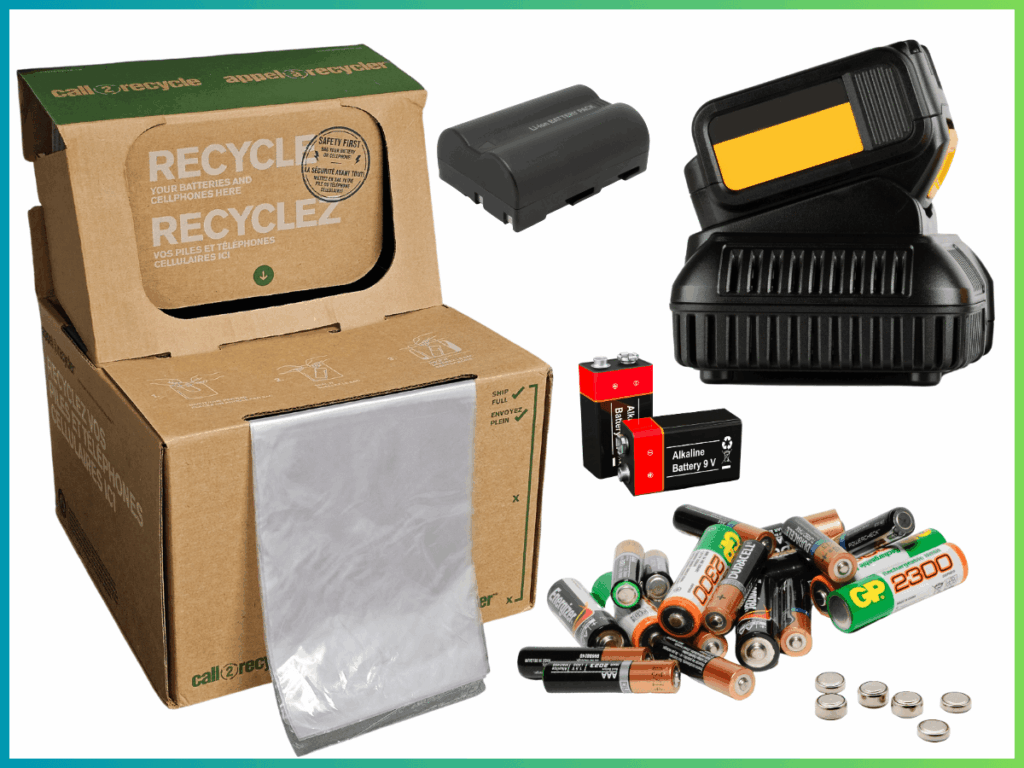
February 18th is National Battery Day and Multi-Material Stewardship Manitoba (MMSM) is partnering with Call2Recycle to raise awareness and remind Manitobans to properly recycle their batteries.
Manitobans are recycling more batteries than ever before, by volume, but there is room for growth. Call2Recycle reports that in 2022, Manitobans helped divert over 153,000 kilograms of batteries from landfill, the strongest collection result in the province’s history. However, an Ipsos survey commissioned by Call2Recycle also showed that only half of Manitobans are recycling their household batteries.
Many of these remaining batteries are being thrown into the garbage, which is hazardous for the environment, while others are ending up in recycling bins. When batteries get into the residential recycling stream, they can pose a danger to sorting staff and have the potential to start fires.
“Residents should only put accepted materials in their recycling bins. Batteries are not accepted in residential recycling programs and can cause challenges in Material Recovery Facilities. Residents should take them to a drop-off location to be recycled,” says MMSM’s Executive Director, Karen Melnychuk.
“It’s important to recycle used batteries to help protect the environment and support a healthy circular economy,” adds Joe Zenobio, President of Call2Recycle Canada. “Batteries should never be thrown out. Materials reclaimed in the recycling process can be used to make new products. So, if you’re not already recycling, National Battery Day is a great time to start.”
Call2Recycle wants Manitobans to remember three things when recycling their batteries: collect, protect, and drop-off. Residents should collect their used batteries in a non-metal container. Protect them by storing them in a cool dry place away from the sun and by taping the positive terminals of lithium, small sealed lead acid (SSLA), button cell, and alkaline batteries over 12V with non-conductive tape. This reduces the chance of sparks. Finally, they recommend residents drop off their batteries once every three months to avoid corrosion. Call2Recycle has over 700 drop-off locations in Manitoba, including convenient and highly accessible major retailers, businesses, and municipal facilities. You can find one near you at www.RecycleYourBatteries.ca.
Call2Recycle is spreading the word with an ad campaign currently on TV and online. Fans attending the February 23rd Manitoba Moose hockey game can also look forward to receiving a “collection cube” to help them start collecting their used batteries at home.
MMSM has developed the Recyclepedia, a web tool and free mobile app that tells you what can and can’t be recycled, and where to dispose of different materials. It’s available in 13 different languages and has location-specific information for different communities throughout the province. Learn more here.
About MMSM:
MMSM is an industry-funded, not-for-profit organization that funds and provides support for Manitoba’s residential recycling programs for packaging and printed-paper, in accordance with the Packaging and Printed Paper Stewardship Regulation. Its goal is to promote the reduction, reuse and recycling of the materials managed in its program while increasing recovery rates.
About Call2Recycle Canada, Inc.:
Call2Recycle® is Canada’s leading organization for battery collection and recycling, fulfilling product stewardship obligations on behalf of over 400 members, including producers of single-use and rechargeable batteries. It is the provincially-approved consumer battery collection and recycling program for British Columbia, Saskatchewan, Manitoba, Quebec, and Prince Edward Island, and operates as a registered Producer Responsibility Organization (PRO) in Ontario according to the Ontario Batteries Regulation. Since its inception in 1997, Call2Recycle has diverted almost 40 million kilograms of batteries from Canadian landfills.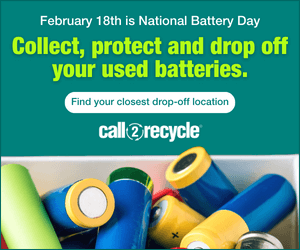
Manitoba Eco Awareness Day and Fashion Fest 2023
Make something beautiful with the materials in your blue bin. Fashion Fest is back, in partnership with Take Pride Winnipeg. (more…)
Holiday Recycling Tips
Many of us are looking forward to the holidays, especially with being able to gather with our loved ones once again. We want to make recycling easy with our holiday recycling guide, as well as some tips to help make your holidays easier on the environment this year.
(more…)Can You Recycle Plastic Bags in Manitoba?
For many years, we’ve encouraged consumers to use the 3Rs when it comes to plastic bags – reduce, reuse and recycle. Read more to learn why plastic bags aren’t accepted for recycling, and tips on what to do with the bags already in your home.
Plastic bags don’t belong in the blue bin
Plastic bags and film are recyclable, but not in your blue bin. When your recycling is picked up from the curb, it’s brought to the Material Recycling Facility (MRF). From there, recyclables pass through the sorting belts and machinery, get baled, then are shipped to be made into something new.
Plastic bags and film are problematic at the MRF for a few reasons. If a bag makes its way into the machinery, everything will need to be shut off so staff can manually remove the bags. This slows everything down and causes huge delays for baling recyclables.
Recyclables should be put in loosely, so they’re able to be sorted easily at the MRF. Bagged recyclables also pose a danger to the sorting staff because they can’t see what’s inside the bag – which could be anything, ranging from garbage, recyclables, or food waste.
Tips for reducing plastic bag waste
If plastic bags can’t be recycled in your curbside blue bin, what should you do?
When you’re out and about, remember to bring a reusable bag with you. Say “no” when a retailer offers you a plastic bag. We don’t need a bag (paper or plastic) for only a few items.
Where possible, reuse the bags in your home. Plastic bags can be reused for several things, such as:
- Stuffing/packing material
- Picking up pet wastes
- Garbage can liners
Also, remember to recycle the plastic bags already in your home. You can find a list of stores accepting plastic bags here.
When it comes to plastic bags, it’s important to remember the 3Rs – reduce your use of plastic bags, reuse the ones you already have, and recycle the ones that remain.